ENGINE POWER PACKS / ASSEMBLERS & INTEGRATORS
Your assembly line.The right engine package.
Engine, cooling and governing, supplied from China. A defined configuration, verified interfaces and a comparable offer at each rating — for the generating sets you assemble.
- Rating & duty
- Mechanical interfaces
- Proposal-defined testing
CLEAR BOUNDARIES, BEFORE ASSEMBLY
What we supply. What you integrate.
There is more to an engine pack than its kVA class. Cooling, governing and interfaces determine what will actually fit your generating set.
Engine, radiator, fan and guard, intake and exhaust equipment. The offered build and interface drawings are named before you adapt the assembly line.
Conceptual engine-pack scope
View the full baseline scope
Baseline included scope
Engine · radiator and cooling group · fan and guard · air cleaner · industrial silencer with flexible connection · starter motor and charging alternator · complete governing package · filters · mounting feet · agreed documents.
Baseline excluded scope
Main alternator · genset controller · base fuel tank · canopy. The proposal controls: system voltage, interface dimensions, exact inclusions and exclusions, and any deviations are stated per line before award.
From your engine list to delivery.
- 01
Engine list received
Ratings in kVA at stated power factor, prime or standby basis, speed and frequency, governing type and reference models become the controlled buying basis for the batch.
- 02
Source qualified
Candidate manufacturers and configurations are compared against the engine list. The proposal identifies the offered manufacturer, model, build location, interfaces and commercial route for each line.
- 03
Test scope agreed
Where load testing or witnessing is included, the proposal defines the unit coverage, duty points, record format, instrument requirements and treatment of deviations.
- 04
Documents closed
The proposal lists the records, configuration data, conformity or origin evidence and packing documents required before the agreed release gate.
- 05
Dispatch controlled
Packing and delivery responsibilities follow the agreed scope, with interfaces, spare-parts basis, warranty terms and claim route stated in the proposal.
Power classes
A clear enquiry at every power class.
State the duty basis, speed, frequency, governing and interface requirements for each rating. The quotation then names the offered manufacturer, exact model and factory configuration line by line.
50–100 kVA prime class
Compact engine packages for lower-output genset lines, compared against the stated duty, frequency, governing and enclosure interfaces.
- Mechanical or electronic governing specified for each line
- Radiator and cooling group matched to the enclosure the set will wear
- Candidate models confirmed per RFQ, with the exact manufacturer, model and configuration stated in the offer
150–250 kVA prime class
Mid-range engine packages for industrial and rental applications, with configuration and interface data fixed before award.
- Reference and alternative configurations compared where the RFQ permits
- Electronic governor package itemised: actuator, speed pickup, controller, harness
- SAE housing and flywheel options listed per model before production release
250–400 kVA prime class
Higher-output engine packages for industrial sets, where duty, cooling, governing and interface choices drive the configuration.
- Exact factory configuration selected against the stated prime duty
- Performance data for the offered configuration included with the offer
- Load-test and witnessing coverage stated in the proposal where the scope requires it
400 kVA and above
Large prime and standby packages, quoted against the declared duty and the interfaces of the assembler's line.
- Availability and build source confirmed in writing before commitment
- Any load-test basis and witnessing coverage agreed against the destination duty
- Delivery schedule confirmed for each quoted unit
What a power pack includes
The proposal fixes the supply boundary so offers can be compared like for like — engine package, interfaces, exclusions and required records.
- A consistent comparison schedule across candidate manufacturers and configurations
- The included and excluded items stated on each offer line before award
- System voltage, interface dimensions and any deviation stated per line in the offer
Engine references: open the technical comparison
Model-reference table
Use a reference model to define the requirement
Use these model references to describe your requirement. We check production status, interfaces and supply evidence before proposing a configuration.
| Classic reference supplied by buyer | Verify for this RFQ | Offer must confirm |
|---|---|---|
| 4BT3.9-G1 / G2 · 4BTA3.9-G2 / G11 | Prime or standby duty, speed at 50/60 Hz, governing type, radiator duty and SAE housing/flywheel. | Manufacturer, exact offered model and suffix, build site, performance data, interfaces and availability. |
| 6BT5.9-G1 / G2 · 6BTA5.9-G2 · 6BTAA5.9-G12 | Required output and reserve margin, aspiration and aftercooling suffix, governing, cooling and SAE interface. | Exact offered configuration, rated duty, interface drawing, electrical system, lead time and commercial counterparty. |
| 6CTA8.3-G2 · 6CTAA8.3-G7 | Reference suffix, declared duty, heat rejection, air and exhaust interfaces, governing and installation envelope. | Current production model proposed, manufacturer and build site, performance curve, dimensions and deviations. |
| 6LTAA8.9-G2 / G3 · 6LTAA9.5-G3 | Whether 8.9- and 9.5-litre references are interchangeable for the line, plus duty, mounting, SAE and cooling data. | Exact family and suffix offered, output basis, interface changes, availability, test scope and price line. |
| NT855-GA · NTA855-G1A / G4 | Reference age and status, prime or standby duty, speed/frequency, cooling arrangement, governing and physical interfaces. | Supported current offer, manufacturer and build location, performance data, accessories, interfaces and spares basis. |
| KTA19-G2 / G3 / G4 | Exact suffix, declared duty, radiator or remote-cooling basis, governing, starting system and SAE interface. | Exact offered model, production source, output and heat-rejection data, included accessories and lead time. |
| KTA38-G2 / G5 | Exact suffix, prime or standby basis, cooling duty, starting and charging voltage, envelope and shipping split. | Current offer and source, performance data, interfaces, supplied accessories, test coverage and delivery basis. |
The offer lists the exact differences between the reference and the proposed alternative. The buyer approves any change of model or interface before award.
Two configurations per rating
Compare configurations. Keep control of your line.
Engine families and catalogues change. A line built around a reference class still needs an explicit comparison with any alternative proposed for the same duty. The quotation shows both routes only where each is technically and commercially available for the live RFQ.
Configuration A — your reference class
Priced against the engine class your line is built around, with the proposal identifying any interface change that would affect tooling, wiring looms or canopy design.
Configuration B — sized to the rating
Where appropriate, a current alternative for the same declared duty is priced separately with its own interface, performance and commercial data.
Mixable line by line
Where both routes are technically suitable, they can be compared line by line so the buyer can decide on compatibility, reserve margin and cost.
Manufacturer and source, named on every line
Each quoted line identifies the proposed manufacturer, production site, exact model and commercial counterparty. Brand, licence or authorised-channel status is stated only when it is supported by current documents for that specific offer.
Load testing: coverage, protocol and sample record
Witnessed testing
The proposal defines the test and record basis
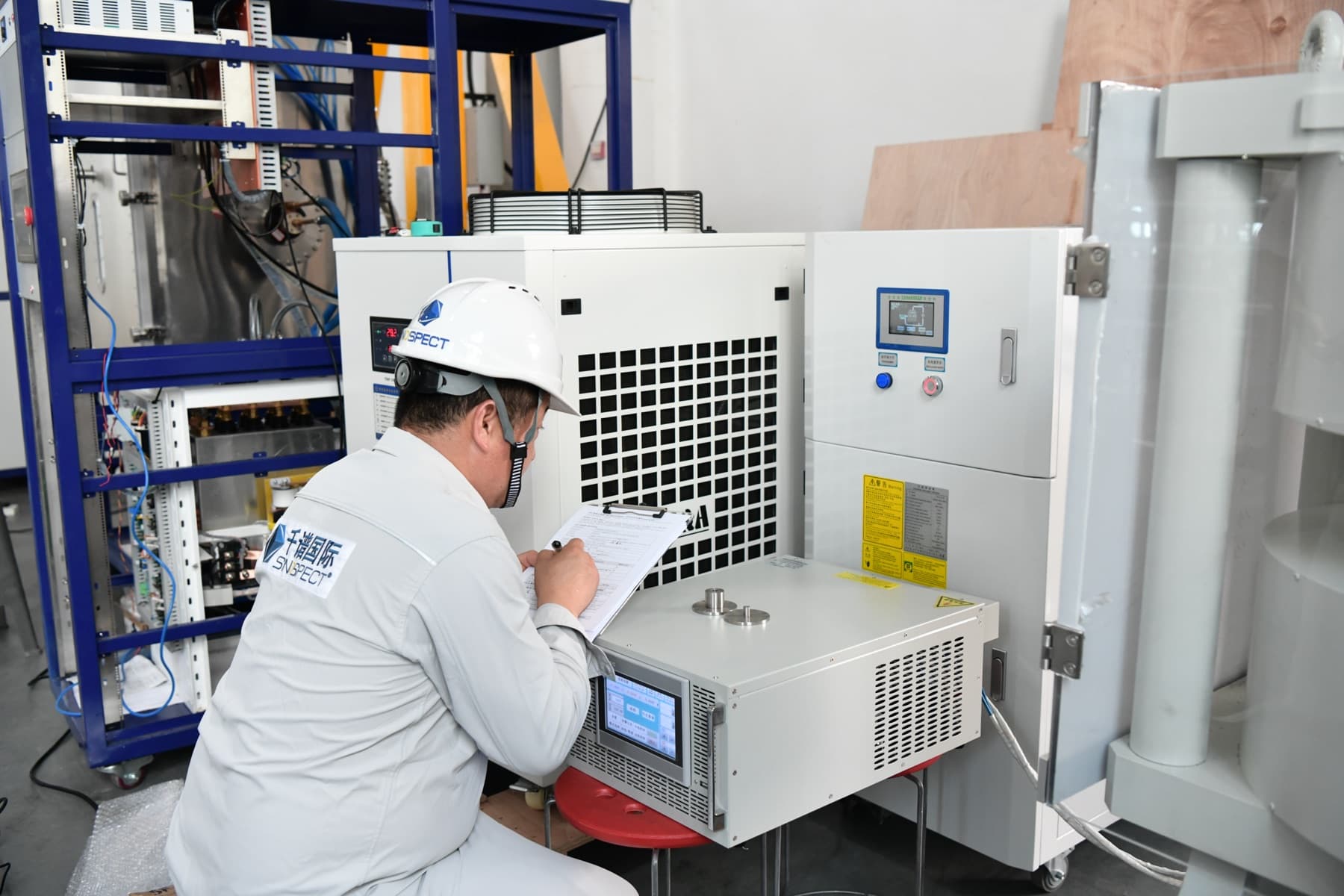
Where load testing is included, the proposal states whether coverage is per unit or sampled, which duty points apply, who witnesses the work, what instruments and calibration evidence are required, how records identify the tested unit, and how deviations return to the buyer for decision.
This is the same acceptance discipline Sinospect applies across witnessed factory acceptance testing — a controlled protocol, named evidence fields and a review route matched to the live equipment and order.
See the artifact
A synthetic load-test record showing possible fields. The live proposal defines test coverage, required records and the format supplied with the order.
WORKBENCH / YOUR SUPPLY RECORD
The approved configuration. The evidence behind it.
Revisions, decisions, planned tests and delivery documents in your engagement record. See what is approved and what still needs closing.
WORKBENCH / POWER
A rating is the start. Not the specification.
engine-list / interface-schedule
- 01Duty, speed, frequency and governing recorded per line
- 02Offered manufacturer, model and build identified
- 03Housing, flywheel, cooling and voltage data to confirm
Example information structure · synthetic content
Workbench is included with the Sinospect engagement, not sold as software. The example above illustrates an energy record structure, not a client file.
Documents, warranty and after-delivery responsibilities
Documentation discipline
Define the batch record before award
The required document pack depends on the order and destination. The proposal should state the configuration record, test evidence, origin or conformity documents, packing records and review gate that apply before dispatch.
Test records and performance data
The proposal defines which units are tested or witnessed, the required records and how performance data is checked against the ordered basis.
Conformity and origin evidence
Applicable certificates, declarations and origin documents identified against the destination market and the buyer's import route.
Customs and shipping pack
Invoice, packing list and transport-document responsibilities allocated for the delivery point and import route stated in the proposal.
The batch dossier, item by item
Possible items include: order-to-item cross-reference · nameplate evidence · test records for the agreed coverage · instrument and calibration evidence where required · model and configuration sheet · packing evidence and packing list · applicable origin, export, conformity and warranty documents. The proposal identifies what applies.
Warranty and after-sales responsibilities
The proposal states the warranty term, coverage, exclusions, spare-parts basis, evidence needed for a claim and the party that receives it.
Where Sinospect is the contracting supplier, the buyer brings a warranty issue to Sinospect and the agreed remedy follows the supply contract. In a buyer-direct engagement, the manufacturer contract governs the claim route.
Send your engine list
Start with ratings, prime or standby duty, quantity and any preferred references. We will identify the supply options and missing interface information.
Reply within one business day. Initial written assessment, or a request for missing information, within two business days.
Or start from the engine-list template (XLSX).