

Service · Factory execution · FAT
Transformer FAT witnessing in China
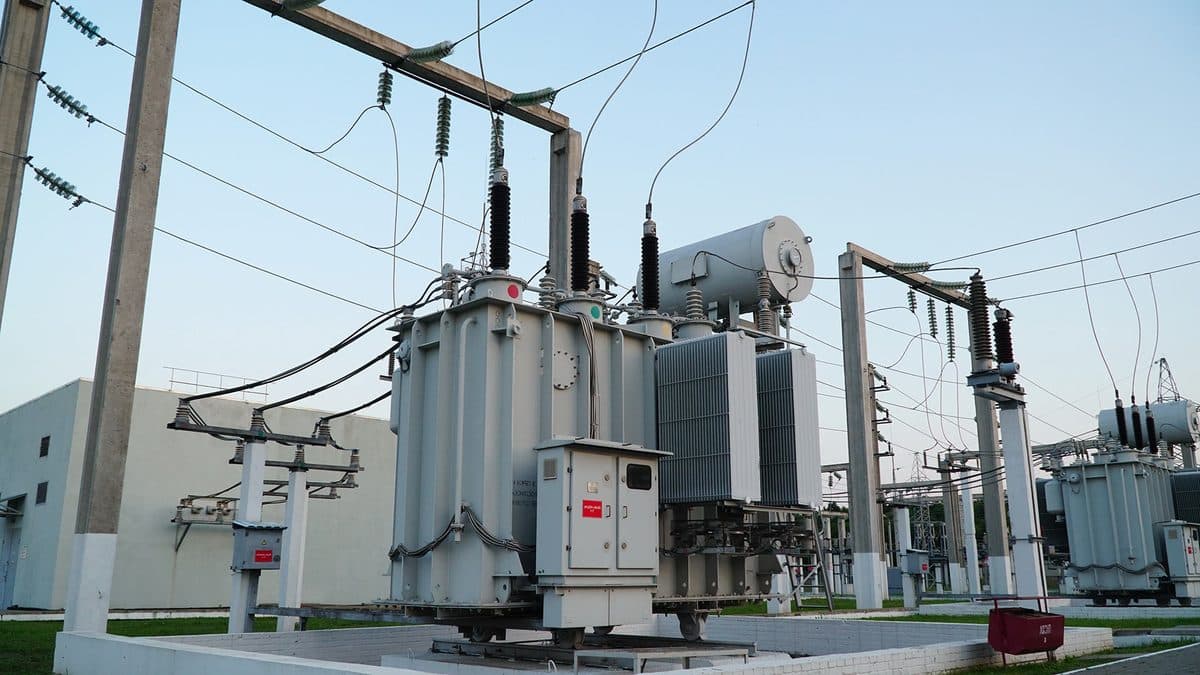
A transformer that fails at site means de-tanking, transport or an outage. On a buyer-direct order, Sinospect can witness the FAT independently at the Chinese manufacturer against the buyer's specification and protocol. On a Sinospect-supplied order, the same work is supplier-side quality control, and any required independent or accredited witness remains separate. In either model, routine tests, specified PD or temperature-rise tests, accessories, certificates and deviations are recorded before dispatch, while correction is still the supplier's responsibility.
- Equipment class
- Power and distribution transformers, oil-immersed and dry-type
- Test basis
- Project-specified IEC 60076 edition or other contract standard, plus your purchase specification
- Where it runs
- Transformer manufacturers' test bays across China
- Engagement output
- Buyer-direct: signed independent witness record; supplied order: supplier-side QA/QC record. Both include a non-conformity log and release recommendation
Quick answers
What does transformer FAT witnessing in China cover under each order model?
On a buyer-direct order, an independent engineer attends the FAT, verifies unit identity, witnesses the agreed tests, checks tap-changer and accessory function, reviews certificates and issues a signed witness record; the buyer keeps the release decision. On a Sinospect-supplied order, Sinospect performs the same checks as supplier-side quality control, while any required independent or accredited witness remains separate and the buyer's acceptance authority stays as stated in the contract.
| Test group | What is witnessed | Acceptance basis |
|---|---|---|
| Identity and construction | Nameplate, serial numbers, rating plate data, drawings, fittings and accessories | Purchase order and approved drawings |
| Routine electrical tests | Ratio and vector group, winding resistance, losses, impedance, dielectric withstand, insulation resistance | Project-specified IEC 60076 edition or other contract standard, plus the purchase specification |
| Special and type tests where ordered | Partial discharge, temperature rise, sound level and other contract-specific tests | Product standard limits or the stricter purchaser specification |
| Function and protection | Tap-changer operation, Buchholz, temperature indicators, protection and alarm devices | FAT protocol and manufacturer procedures |
| Documentation | Test certificates, oil reports, calibration references, manuals and as-built changes | Contract document list |
Why witness a transformer FAT when the factory issues a certificate?
Because a transformer failure discovered at site is one of the most expensive defects an equipment buyer can face: repair means de-tanking, transport or a site outage. On a buyer-direct order, independent witnessing tests the measured values, calibration and exact unit before dispatch. On a Sinospect-supplied order, the same verification is recorded as supplier-side quality control; any independent record required by a project team, insurer or lender must come from the separately appointed witness or accredited body.
| Question | Certificate only | Witnessed FAT |
|---|---|---|
| Was the exact unit on your order tested? | Asserted by the factory | Verified against nameplate and serials on the bay |
| Were the test conditions and calibration valid? | Unstated | Instrument references and setup recorded |
| What happened on failed runs? | Absent from the certificate | Non-conformities logged with supplier response and witnessed retest |
| Is there a release basis before dispatch? | Weak | Signed witness record with a release, hold or retest recommendation |
01 · Scope
When transformer FAT witnessing is the right control
Transformers concentrate a project's electrical risk into a single tank: the insulation system, winding geometry and accessories are invisible once the unit ships, and meaningful verification after dispatch costs a crane, an outage or both. The FAT is the one moment when measured evidence is economical. Independent witnessing fits a buyer-direct order when the unit is critical, the contract specifies acceptance criteria or the buyer's engineers cannot travel. When Sinospect supplies the transformer, those checks form its supplier-side quality control and any contractually required independent or accredited witness remains separate. For accessories or spares, a pre-shipment inspection is usually the right tier instead.
It becomes useful when
- A power or distribution transformer order carries contractual routine, type or special tests that must be demonstrated before release.
- Partial discharge, temperature rise or loss measurements decide acceptance, penalties or capitalized loss evaluation.
- The project schedule cannot absorb a failed unit discovered at energization, and the site has no practical repair path.
- A lender, insurer, EPC or downstream customer requires an independent factory-side test record before payment or dispatch.
- Your engineers attend the first unit of a multi-unit order at most, or stay at the project site.
- The supplier's own certificate is the only evidence on offer and the order value makes that unacceptable.
02 · Controls and evidence
What the witness controls on the test bay
Control point
Test basis, protocol and readiness
Purchase specification, agreed FAT protocol, test-bay availability, instrument list and calibration references confirmed before the visit — with the routine, type and special test scope stated for the buyer’s review.
Control point
Unit identity and construction conformity
Nameplate and rating-plate data, serial numbers, approved drawings, fittings, bushings, radiators, conservator, cable boxes and accessories checked against the purchase order before testing starts.
Control point
Routine electrical tests witnessed
Voltage ratio and vector group, winding resistance, no-load and load losses, short-circuit impedance, dielectric withstand and insulation resistance witnessed with measured values recorded against the acceptance limits of the contract standard and specification.
Control point
Special tests where the contract requires them
Partial discharge measurement (calibration, background noise, voltage sequence and recorded level), temperature-rise runs, sound level and other ordered type or special tests witnessed against the product-standard or purchaser limits.
Control point
Accessories, protection and documentation
Tap-changer operation through its range, Buchholz and pressure devices, temperature indicators, alarms and protection checks where applicable; test certificates, oil analysis, calibration references and manuals reviewed while the unit is still on the bay.
Evidence reviewed
Evidence captured during the witnessed FAT
- Test basis and readiness record
- Purchase order, specification, approved drawings, FAT protocol and acceptance criteria checked before the witness event.
- Supplier readiness confirmed: unit complete, test bay booked, instruments identified with calibration references, responsible test engineers named.
- Routine, type and special test scope with exclusions documented against the contract.
- Witnessed measurement record
- Unit identity photographed and tied to the test record: nameplate, serials, major fittings.
- Each witnessed test recorded with measured values, test conditions, instrument references and pass/fail against the acceptance limit.
- Deviations, retests and supplier explanations captured as they happen, with photo or video evidence where useful.
- Disposition and release record
- Non-conformities logged with severity, requirement reference, supplier response and target closure.
- Witnessed retest results and corrected documentation captured where issues close before release.
- Release, conditional release, hold or retest recommendation prepared for the buyer's decision.
03 · Deliverables
Deliverables issued
Deliverable
For · Procurement and engineeringWitness plan and readiness note
The agreed witness scope, test basis and readiness status before the visit.
Deliverable
For · Engineering, project and external reviewersSigned transformer FAT witness record
Witnessed tests with measured values, acceptance limits, instrument references and pass/fail status, tied to the unit serial numbers.
Deliverable
For · Engineering and operationsPhoto and measurement evidence pack
Traceable visual and measured evidence linked to test steps, serials and any non-conformities.
Deliverable
For · Procurement and the supplierNon-conformity and retest log
Each failure or deviation classified, linked to its requirement, tracked through supplier response, witnessed retest and closure.
Deliverable
For · Procurement and financeRelease recommendation
Release, release with comments, hold or retest — a practical recommendation for the contract-defined payment and dispatch decision, which the contract's acceptance authority then takes.
04 · Risks controlled
Risks controlled
Risk
The factory certificate reports clean results, but the failed runs and adjustments between them never appear on paper.
Control response
The witness is present for the actual test sequence: failed runs, adjustments and retests are recorded with values.
Risk
Results are genuine but belong to a different unit, a type-test reference or an earlier serial.
Control response
Every witnessed value is tied to the nameplate and serial numbers of the units on your order, photographed on the bay.
Risk
PD or loss measurements pass on paper against the wrong limit, the wrong voltage sequence or an uncalibrated circuit.
Control response
The acceptance limit, test-voltage sequence, circuit calibration and background noise are checked and recorded before the measurement counts.
Risk
Accessories, protection devices or the tap-changer arrive at site untested because the FAT focused on the electrical routine tests only.
Control response
Tap-changer, Buchholz, temperature indicators, alarms and ordered accessories are exercised and recorded where applicable as part of the witness scope.
Risk
Documentation gaps — missing oil reports, calibration references or as-built changes — surface months later at commissioning.
Control response
The document pack is reviewed while the unit is still at the factory, and gaps are logged as open items with owners before release.
Risk
The buyer pays and releases on a verbal "all passed" and inherits the dispute after dispatch.
Control response
The signed witness record and release recommendation give the buyer a written basis to pay, hold or require retest — before the unit leaves.
05 · Background resources
Related
- Service · Factory acceptance test in ChinaFAT scope, control points and deliverables.
- Service · PD test witnessing at FATThe specialist witness scope when partial discharge measurement decides acceptance.
- Service · Switchgear & panel FAT witnessingThe sibling scope for LV/MV switchgear, control cabinets and panel assemblies.
- Resource · Partial discharge testing at FATA specifier's guide to PD at FAT and SAT for transformers, switchgear and HV cables.
- Resource · Factory acceptance test checklistThe twelve-section FAT checklist, downloadable as a printable PDF.
- Sector · EnergyHow Sinospect supports energy-sector buyers across supply, inspection and delivery.
06 · Questions
Frequently asked questions
Which transformer tests are witnessed during a FAT in China?
The witnessed scope follows your purchase specification and the agreed FAT protocol. For power and distribution transformers this typically covers the routine tests of IEC 60076 or the equivalent contract standard: voltage ratio and vector group, winding resistance, no-load loss and current, load loss and short-circuit impedance, applied and induced voltage withstand, and insulation resistance. Partial discharge measurement, temperature-rise runs, sound level or other type and special tests are witnessed when your contract requires them for the specific units on order.
Can the factory's own test report be trusted without a witness?
A factory certificate states results; it does not prove the test conditions, the instrument calibration, the unit identity or what happened between a failed run and the final printout. Witnessing ties the measured values to the exact serial numbers on your order, records the test setup and calibration references, and captures deviations while the transformer is still on the test bay — when correction is cheapest.
What happens if the transformer fails a witnessed test?
The failure is recorded as a non-conformity with the measured values, the applicable acceptance limit and the supplier's response. The supplier proposes rework, repair or retest; the retest is witnessed against the same criteria. Major failures normally support a hold recommendation. On a buyer-direct order, the buyer makes the release decision under its contract. On a Sinospect-supplied order, Sinospect records a supplier-side quality-control disposition; buyer acceptance and any payment or shipment consequence follow the signed contract.
Does Sinospect also witness partial discharge measurement on transformers?
Yes, where PD is specified for the units on order. On a buyer-direct order, the independent witness scope covers measuring-circuit calibration, background noise, the applied voltage sequence and the recorded PD level against the applicable limit. On a Sinospect-supplied order, those checks are supplier-side quality control and any required independent or accredited witness remains separate.
When should the FAT be booked relative to the production schedule?
As soon as the supplier can state a realistic test-readiness date — ideally when the active part is assembled and tanking is scheduled. Booking early lets the readiness check catch missing accessories, incomplete documentation or an unavailable test bay before the visit, with time to fix them. Send the order scope and the expected readiness window; Sinospect acknowledges the request within one business day and, when the file is sufficient, follows with the initial written scope and quotation within two business days.
07 · Getting started
What to send — start with what you have
Send the purchase specification and the test plan available. Sinospect uses them to propose the witness scope and assess feasibility.
Purchase specification or datasheet
Ratings, vector group, losses, and the standards the transformer was bought against.
Agreed FAT protocol, if one exists
The manufacturer's test plan or your own — otherwise Sinospect proposes the witness scope from the specification.
Purchase order and manufacturer details
What was ordered, how many units, and where the test bay is, so the visit can be arranged.
Special test requirements
PD limits, temperature-rise runs, sound level or other contract tests that decide acceptance.
Expected test-readiness window
When the manufacturer expects the units ready, so witnessing is booked before dispatch pressure builds.
Send the documents available. Sinospect identifies the information needed to define the scope.
Define the witness model for your transformer FAT
Send the transformer specification, the manufacturer and the expected test window. On a buyer-direct order, Sinospect can propose an independent China-side witness. On a Sinospect-supplied order, the same work is supplier-side quality control. Sinospect acknowledges the request within one business day. When the file is sufficient, the initial written assessment follows within two business days with the proposed scope, a quotation and the earliest feasible attendance — or explains plainly if a lighter control fits the order better.